Immigrants in my Backyard
At my house today, the back yard is full of brown-skinned workers speaking Spanish. Whether they are illegal or legal, from Mexico, El Salvador, or Honduras, I can’t tell. But I am grateful for their labor. Without them, my downstairs toilet would remain stopped-up, and the dishwasher and washing machine would remain unusable because the pipes are blocked by tree roots. I don’t pay the workers directly, the plumber does, so I don’t yet know if these men are paid fairly or not. If I inquired, the plumber might tell me the truth, or not. I would have no way of knowing. I do know it is hot outside—this is Houston in July—and the men are working hard. In fact, all up and down my street today, young brown-skinned men are mowing yards, putting on a roof, and doing house repairs. And brown-skinned women are working inside the houses that sit on those yards and under that roof.
I never had to earn my living doing such work, and it is a good thing. I wouldn’t have lasted a day and would have gone to bed hungry. I grew up here in Texas, never knew hunger or fear for my safety, went to school, and got jobs that paid enough to live comfortably. And now, I can walk past these workers, get into my car, and go out to lunch with a friend. Have I earned my privilege? Maybe a little, through hard work, but much of it arises from history, from the circumstances of birth and from being white.
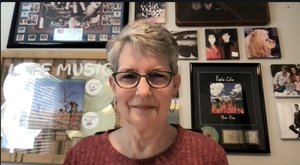
My lunch companion, Susan Yarbrough, a retired immigration judge, and I talked about personal things for a while, but then the conversation drifted to the seemingly unavoidable politics of the day. She mentioned that she is occasionally asked to speak to groups about immigration, and she usually opens with the question, “What are borders for?” Her answer: that people use borders to protect their ethnicity.
How does a culture protect its ethnicity in an age of global communication, trade, travel, and climate change? People are on the move. How high does the fence have to be to keep them out? When workers from poor countries help sustain the economies of rich countries, what is the purpose of borders now and how should they function? Can borders even begin to protect an ethnicity? Aren’t groups enriched, just as individuals are, by cultural mixing?
Has the United States always respected the borders of other countries? Not in Iran, with the killing of Prime Minister Mossaddegh, in 1953, in a coup d’etat orchestrated by the C.I.A. and the U.K’s MI6. Not in the support given for decades to repressive regimes in Central and South America. When civil wars occur, chaos ensues, and drug lords step into the vacuum, do we Americans recognize our responsibility? As my lunch friend Susan continued, she hopes that Americans will begin to do so—to acknowledge our collective role in contributing to the border crisis at our southern border. What does taking responsibility mean? Not, she would say, just in going to Brownsville or McAllen and handing out food and clean clothes, compassionate as that may be. Maybe humanitarian aid mitigates human suffering just enough so that citizens do not rise up and demand immigration reform. Does acknowledging the American role in causing the immigration crisis help Americans think about accountability? Can accountability lead to thinking about workable policy? If we don’t craft a workable immigration policy, are we willing to give up immigrant labor?
I don’t know about you, but I am not willing to try to run an electric snake through my sewer line or nail new shingles on my steep roof the next time it leaks. I need the labor of the young Hispanic men in my back yard. I don’t know any other people willing to do such labor. But I know that we should devise a system for such men and women to immigrate or cross back and forth legally, and to be paid fairly.